
Top 10 Tips To Assess Qualified Technicians In PAT in Hinckley
The capability of testers to perform Portable Appliance Testing represents a critical factor for transforming a mechanical testing process into one that is legal. In the UK and in particular, the Electricity at Work Regulations, 1989, PAT testers are not required to possess a license or any other legally recognized qualification. Regulation 16 says that persons are required to have "technical competence or know-how" in order to avoid injury and/or harm. To meet the "competence" principle, the person who is the employer (dutyholder) must choose and employ only those with an education or formal training, practical knowledge, and sound judgment. Due to the lack of a compulsory qualification, there are varying degrees of technical capabilities. It is therefore essential that dutyholders understand how to prove competence beyond simply having a certification. A trained technician knows the fundamentals of electrical safety, and can discern results accurately, and make educated choices about pass/fail by using the IET Code of Practice and offer valuable insights into risk assessment.
1. The EAWR 1989 definition of competence in Hinckley
Regulation 16 of Electricity at Work Regulations (1989) states that all persons must possess the required skills to stay safe from injury or danger. HSE defines competence as "the ability for a person to perform a task with out risking themselves or others." For PAT testing, it's an amalgamation of three elements – adequate knowledge of electrical theory (theory) as well as sufficient knowledge (practical applications) as well as a thorough comprehension of system (specific equipment and the environment they work in). A technician must possess all three in order to be legally competent.
2. Formal qualifications are not equivalent to. demonstrable competence in Hinckley
Although there isn't any legally binding requirement for a particular certification, formal education provides the most straightforward evidence of knowledge. City & Guilds qualification 2377 ("In-service inspection and testing of electrical equipment") is industry standard. Possession of the certificate does not imply competence. It must be combined together with practical experience. The dutyholder will look at the qualifications relevant to the job as well as evidence of practical experience. In order to be considered qualified, a technician that has no formal qualification must provide solid proof of knowledge and experience.
3. City & Guilds Qualification 2377 – a Guide
City & Guilds' 2377 qualification is an Level 3 qualification which assesses the knowledge of a candidate about the IET Code of Practice, and their capability to perform checks and tests correctly. It is offered in two parts: the theory-based multiple choice exam 237777 and the practical test 237778. The entire award proves that the knowledge of the technician as well as his skills in the field were independently assessed. To confirm this certification, it is recommended to obtain the certificate number. Then, this can be checked on the City & Guilds Online Verification Portal.
4. Practical Experience On Experience is Essential in Hinckley
It's not enough just to be able to comprehend the concept. It is also necessary to be able to put it into action. A skilled technician has a lot of hands-on experience testing different appliances in various environments. They are able to spot faults that a novice might overlook, work in environments such as construction sites or industrial plants, and operate equipment in a safe manner. To determine the expertise of a technician the duty holder should inquire about their years of work and what types of sites the tester has worked on.
5. Knowing the IET Code of Practice is crucial for inspections in-service as well as testing
The IET Code of Practice is the reference manual for testing PAT. The IET Code of Practice is the primary source for PAT testing. Technicians who have obtained a certification must have an IET Code of Practice and be able to comprehend the contents of it. It is crucial to comprehend the different classes of equipment as well as the sequence of examinations and tests, the best way to use test instruments correctly and also the results that are acceptable or not. Their ability to reference and use this guidance in a correct manner is a crucial indicator of their professional competence and expertise.
6. Equipment Calibration and Understanding Test Instruments
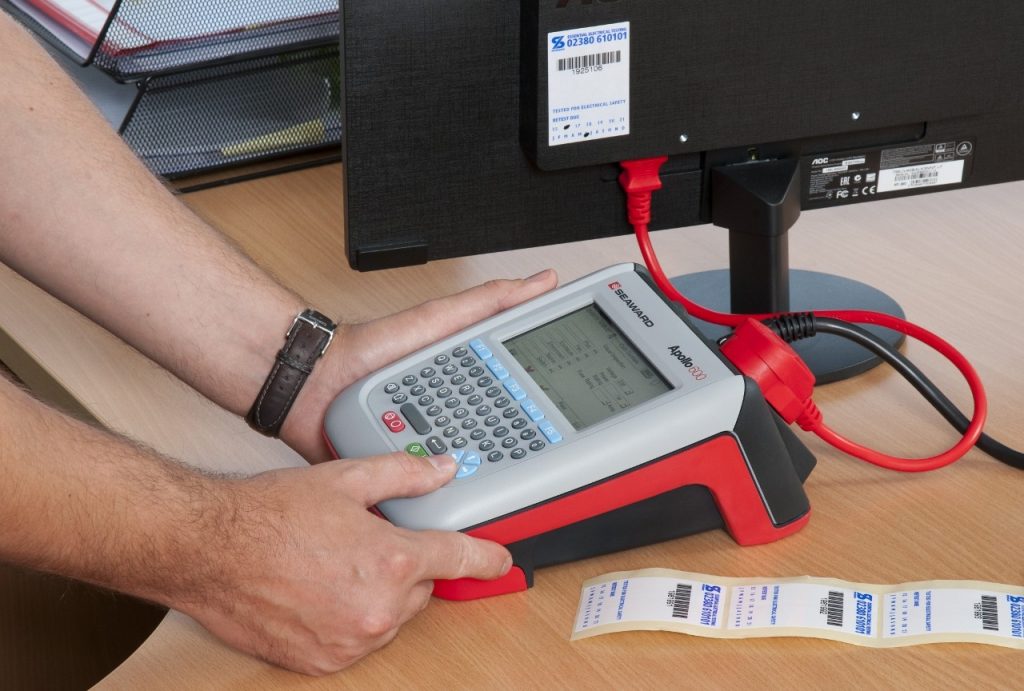
A technician who has the appropriate expertise knows that their test equipment is crucial to obtaining precise results. To ensure precision they should be aware that PAT testers need to be regularly calibrated (normally once a year) by UKAS accredited laboratories. They should have an authentic certificate of calibration for their device. In addition, they should know how to correctly utilize the device, conduct daily user checks (e.g. lead tests) and understand any results it provides instead of just logging numbers.
7. Capability to conduct meaningful visual Inspections in Hinckley
Visual inspections reveal the presence of at least 90% of the faults. Highly skilled technicians place the highest importance on this aspect and is meticulously examining plugs, cables, connectors, and casings for damage, wear or indications of overheating. They are able to correctly connect a plug and ensure the correct rating for a fuse. A tester who isn't experienced may hurry or skip the whole process and rely solely on their electronic tester.
8. Judging and decision-making Interpreting results and applying the Pass/Fail guidelines in Hinckley
The technician is accountable for interpreting the readings provided by the electronic tester. It is the ability of the technician to interpret readings, in connection with the IET Code of Practice and the equipment that shows their competence. For instance, they need to know when a slightly high resistance to insulation is a good sign or when a seemingly passable earth continuity reading may indicate a latent fault in a particular kind of appliance. This ability to make decisions is the true value of a professional who is qualified.
9. The importance of insurance and liability in Hinckley
A competent technician, while not legally required, must be covered by Public Liability Insurance, (e.g. PS2-5,000,000). The client is covered in the event the technician causes property damage during the testing. The duty holder can also enhance their "due diligence" defense by appointing a competent technician. They can then show that they took the necessary steps to choose an appropriate person.
10. Skills for documenting and communicating in Hinckley
Documentation is crucial to the testing process. A skilled technician is required to create clear and understandable reports, asset registers, that correctly identify and record each appliance. The results of all tests should be recorded and accompanied by an unambiguous pass/fail conclusion. Technicians should be able to communicate effectively with the duty holder by explaining the issues as well as the risks and actions required (e.g. repair, replacement). Communication is an important element of the safety procedure. Take a look at the recommended Hinckley portable appliance testing for more recommendations.
Top 10 Tips On Service Contracts For Fire Extinguisher Maintenance in Hinckley
In the UK the United Kingdom, a service contract for fire extinguisher repair is an important decision that extends beyond the simple question of the cost. Within the UK regulatory environment, which is governed by Regulatory Reform (Fire Safety) Orders of 2005, service contract is the formal procedure by which the responsible person fulfills their legal responsibilities to ensure the safety of firefighting devices. A well-designed agreement gives clarity as it ensures compliance and sets out the responsibilities of both parties. Poorly drafted agreements can create false assurances, hidden liabilities and compliance gaps. Knowing these contracts, and the inclusion of services and pricing models as also termination clauses or limits on liability, is essential when choosing a partner to maintain your equipment and actively contribute to your fire safety plan.
1. Contract Types: Full-Compliance and. Time-and-Materials in Hinckley
Understanding your contract’s fundamental structure is crucial. The most comprehensive choice is to choose a Full Compliance or Inclusive Contract. For a fixed annual cost they take on the responsibility of all scheduled services (annually 5 years, 10 years, or every year) comprising all parts, labour, refill agents and all other items that are required. They are proactive in scheduling their visits and ensure that the work performed is documented. This is a cost-effective model and reduces the risk associated with unexpectedly high costs for service. A Time-and-Materials or Call-Out Contract, on other hand, typically covers only the annual basic service. Additional work, such as repairs or five-year discharge tests is billed as an additional charge. This could result in unpredictable cost and require you to manage the schedule of more complicated services.
2. Pricing Structure Transparency
A great contract should be clear in its pricing and will include all costs. Review the contract to make sure it breaks down the costs in a clear manner. Does it provide a price per extinguisher kind? Are there separate line items for annual services and an estimated cost for future extended services, if they are not provided? It is crucial to find out all possible hidden costs. It is important to ask questions about any hidden costs. Transparency in quotes allows budgeting to be accurate and builds confidence.
3. What services are included?
This is the basis of any contract. The contract must clearly specify what services are covered. Does the price include:
All Basic Annual Services?
All 5-year Extended Services (displacement tests for powder and water foam)? in Hinckley
Do CO2 pressure and 10-year overhaul tests contain all the CO2? in Hinckley
Replacement of parts (seals, pins, hoses and valves)?
Refill agents (powder, foam concentrate)? in Hinckley
If you're in need of borrowing equipment while yours is being fixed, is it possible to borrow it? in Hinckley
It is also crucial to have an exclusion list. For instance, the replacement of equipment which were damaged or stolen or any repairs needed because of malicious damage.
4. Service Scheduling Protocols
The contract should clearly define the provider's obligations with respect to scheduling. Will they contact your to arrange an annual visit? How long notice do they intend to give you? What procedure is in place for the engineer's arrival at a specific time? Should he report at the reception and be accompanied by a third party? Additionally, the documentation should contain information about the typical duration of a service call for your size premises as well as the procedure to ensure that your business won't be disrupted.
5. Delivery of certification and documentation in Hinckley
The requirement for documentation is not only a matter of goodwill, it is legally required. The contract must state when and what type of certification will be given. A complete Service Report is required after every service. This report must include the complete list of equipment that has been serviced and the type service that was performed. It should also contain any suggestions or faults that are discovered. This document must be promptly given as it will be the primary evidence of compliance. The contract should also specify the format (e.g., digital PDF, access to an online portal, or a hard copy) and who it will be sent to.
6. Repair and Resolving Equipment Issues Policy in Hinckley
A crucial clause describes the process for handling faulty equipment. What is the meaning of the manufacturer by "beyond economical repair"? What is their stipulated process for condemning an extinguisher? In the contract, it has to be clearly stated who will pay for a new unit. A fully-compliant agreement should include the cost of replacement, with the only exception of theft. It is important that the contract outlines the timeframe for the installation and maintenance of your security system so that you avoid leaving your premises unprotected for an extended period of time.
7. Response times for reactive and emergency work in Hinckley
Planned visits are scheduled, however emergencies are not. The contract should define the commitment of the service provider to respond to urgent issues such as a vandalism or accidental discharge. Does the company have a designated phone line? What is your guarantee on time to respond to a callback, and the arrival of an engineer on site? These terms can be categorized based on severity and could result in additional charges for certain types of contracts.
8. Liability and Indemnities for Insurance in Hinckley
This is a vital legal defense. The contract should state the limits of Public Liability Insurance and Professional Indemnity Insurance. Check that the insurance they hold is current and in good condition. Check out the clauses that are designed to limit liability. The rule of thumb is to limit liability at the value of the agreement. However, this should be reasonable.
9. The contract's duration includes renewal, termination and duration clauses. in Hinckley
The commitment you make is important. Are you signing a one-year contract that rolls over, or does it lock you in for a longer term like 3 or 5 years? What is the time frame for your notice to end the contract? Do you have penalties if you terminate early? The renewal clause should state that the company is not will automatically renew the contract without providing a revised price. You should have the option of termination for contract breaches for example, such as not showing up regularly or failing to provide certification.
10. Clauses of Assignment and Subcontracting in Hinckley
Check any clauses that allow the provider to subcontract or transfer the contract. It is not uncommon for subcontracting to occur. Your contract should stipulate that the subcontractor holds the same insurance coverage and certificate as the primary contractor (e.g. Bafe SP101). This will ensure that the quality and compliance of the services are maintained regardless of who physically performs the work, safeguarding you from any dilution of the standards. Follow the top rated Hinckley fire extinguisher checks for blog recommendations.

